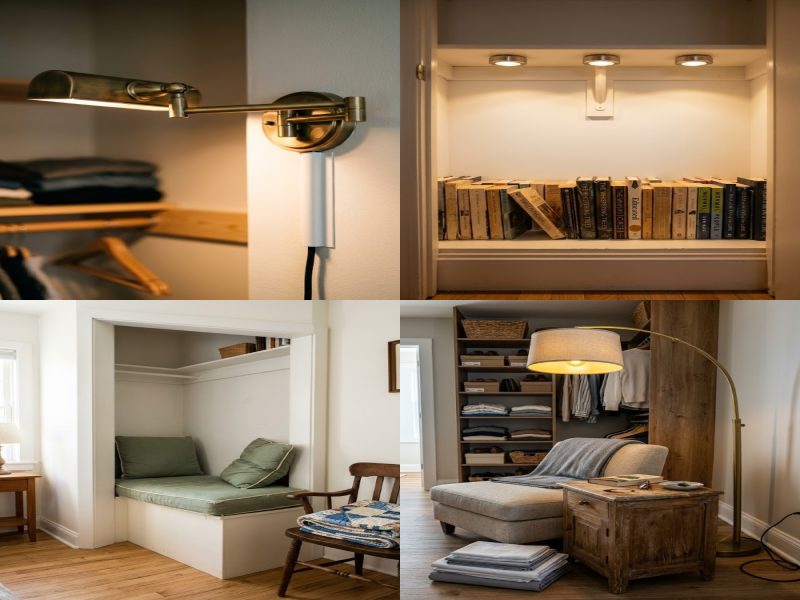

Standard US reach-in closet: 24 inches deep. That's the whole number. That's what decides everything else.
An armchair is 30–36 inches deep. So every dreamy closet nook photo you've saved with a real chair tucked inside it is either a walk-in or a staged corner that was never a closet. Nobody on page one admits this, so you buy the chair, and then you return the chair.
I've sorted these 15 by closet depth, front to back, because depth is the only measurement that decides what fits. Group one is the true 24-inch reach-in. Group two is a deeper closet, roughly 28–30 inches. Group three is doorless alcoves and walk-ins, where you finally get room to be indulgent.
Cozy season starts creeping in around September and this is a weekend project, not a renovation. Realistic all-in budget for a reach-in: $80–$400 depending on how far you take it. Full breakdown at the end. If your closet is genuinely full of clothes you need, skip this whole thing and steal a corner instead, like these small cozy bedroom corner setups.
Part 1: The True 24-Inch Reach-In (Ideas 1–7)
Interior depth, wall to jamb, is about 24 inches. Older buildings run 22–23. Measure at three points before you buy anything, because closets are rarely square.
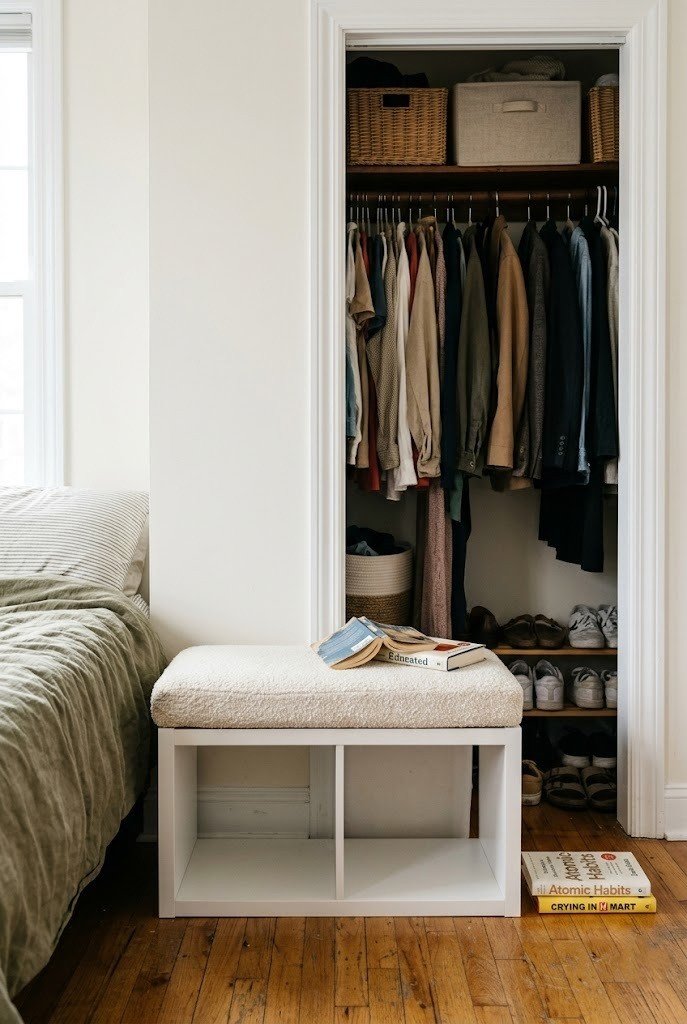
1. The Cube Shelf Bench
 Save
SaveThis is my pick, and it's not close. A two-cube shelf unit laid on its side is 15 3/8 inches deep, which leaves you eight inches of breathing room in a 24-inch closet and gives you a bench that looks built-in without a single screw going into a wall.
Top it with a cream boucle cushion cut to 30 by 15 inches. The cubes underneath swallow blankets. Books go on the closet floor beside it because the bench is now the seat, not the storage.
An IKEA KALLAX in this size runs around $70, and it's the cheapest way to get a bench that doesn't wobble.
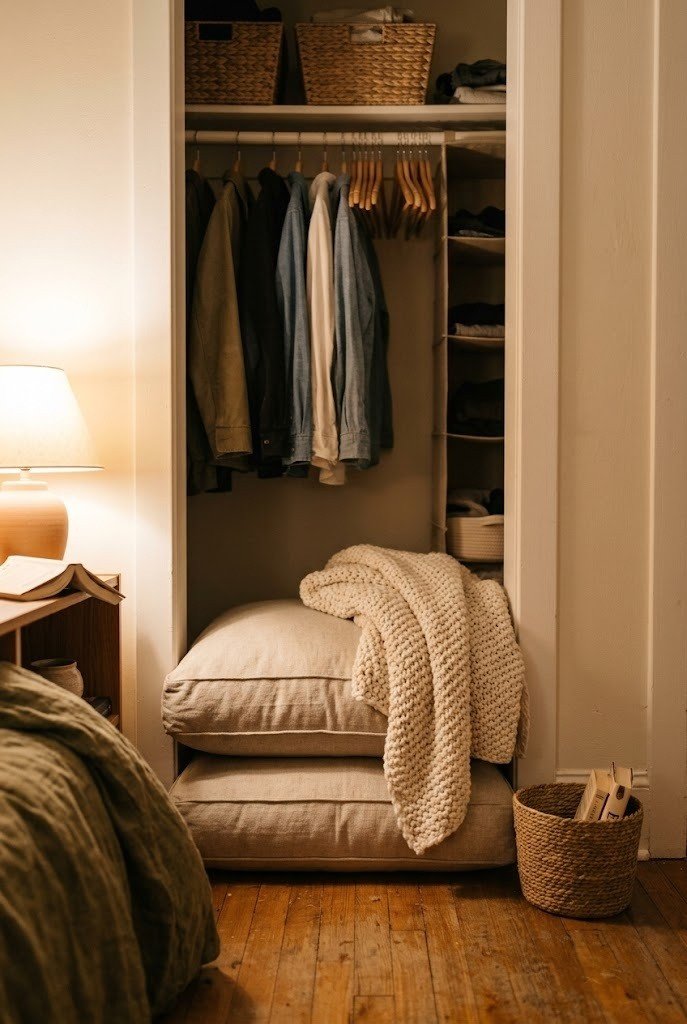
2. Just Cushions on the Floor
 Save
SaveTwo oatmeal linen floor cushions. A chunky knit throw over the edge. A basket of books. Done, and you're sitting in it tonight.
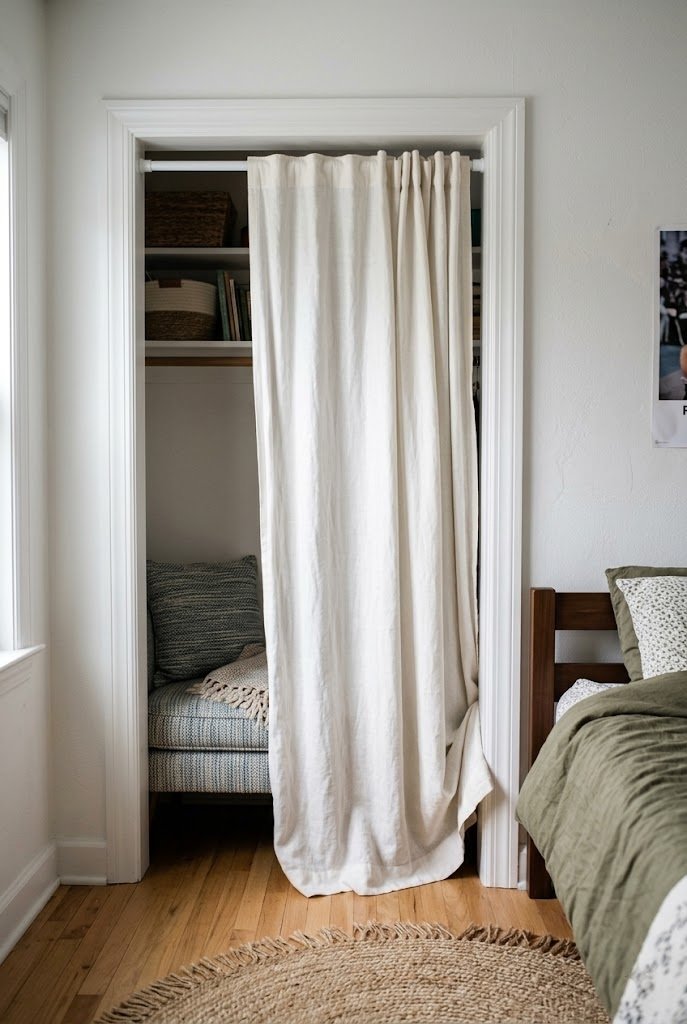
3. A Curtain Instead of Doors
 Save
SaveFair warning: tension rods slip. Always at 2am, always with the whole curtain landing on you. Buy the widest-diameter rod your opening takes and set it high inside the jamb, not against the trim.
A soft white linen panel pulled half open reads cozy in photos and hides the fact that you haven't finished the inside yet. It's also the single fastest way to make an opening feel like a room.
4. Rechargeable Wall Sconces
 Save
SaveHere's the thing every list skips: there is no outlet inside your closet. None. Building codes don't put one there, so the pretty plug-in lamp in the inspiration photo is running a cord you can't see.
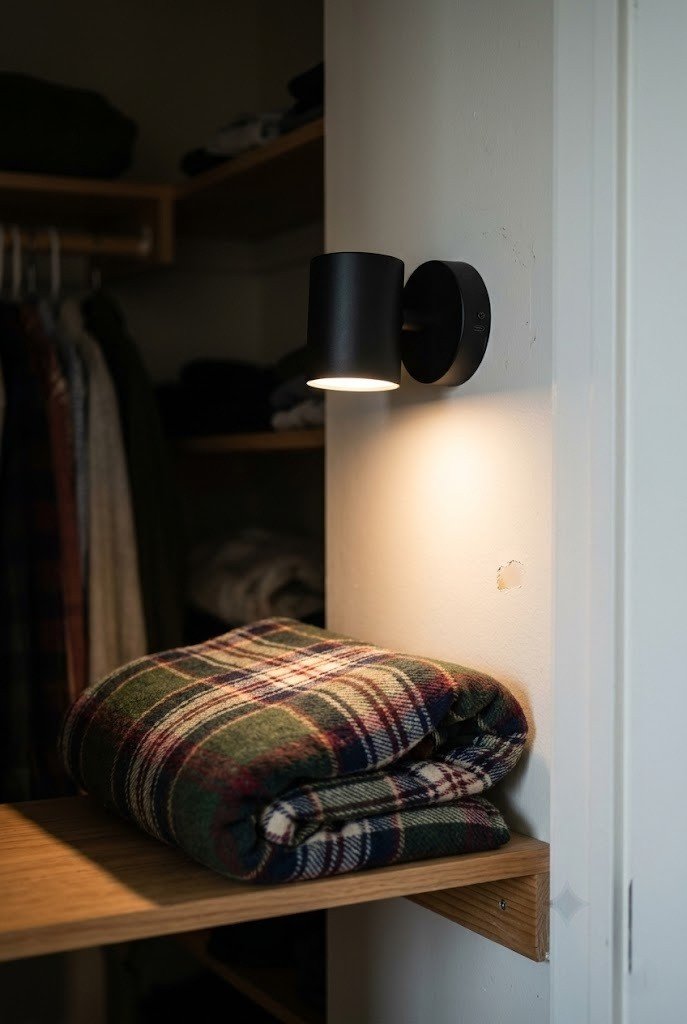
Modern rechargeable sconces solve it properly. A matte black one mounted on the side wall throws a warm pool of light onto a folded plaid blanket, and most run around 300 lumens on a USB-C rechargeable bulb, which is genuinely enough to read by.
Look for magnetic mounting plates. They come off the wall for charging and leave nothing behind. Basic pairs start about $20; the ones that look like real fixtures run around $90.
5. Puck Lights Under the Existing Shelf
 Save
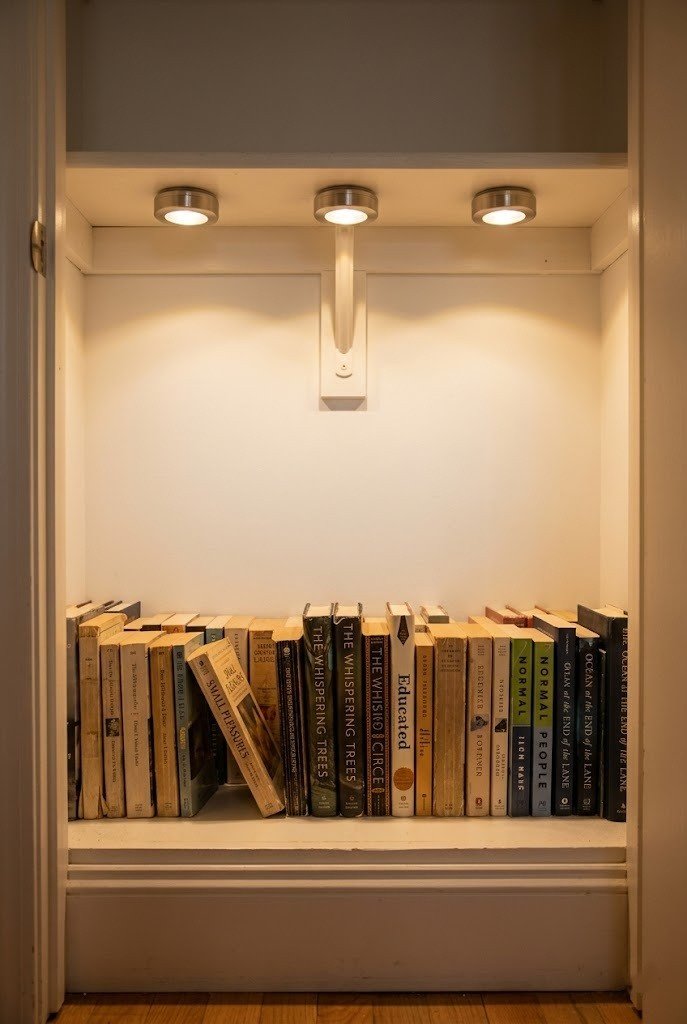
SaveYour closet already has a top shelf. Stick three small round pucks to its underside and you get warm pools of light falling onto a row of paperbacks with zero mounting decisions.
6. The Trimmed Foam Daybed
 Save
SaveEveryone tells you to drop in a crib mattress. Nobody tells you a standard one measures 27 1/4 by 51 5/8 inches, which is three inches too deep for a 24-inch closet. It doesn't fit. It won't fit.
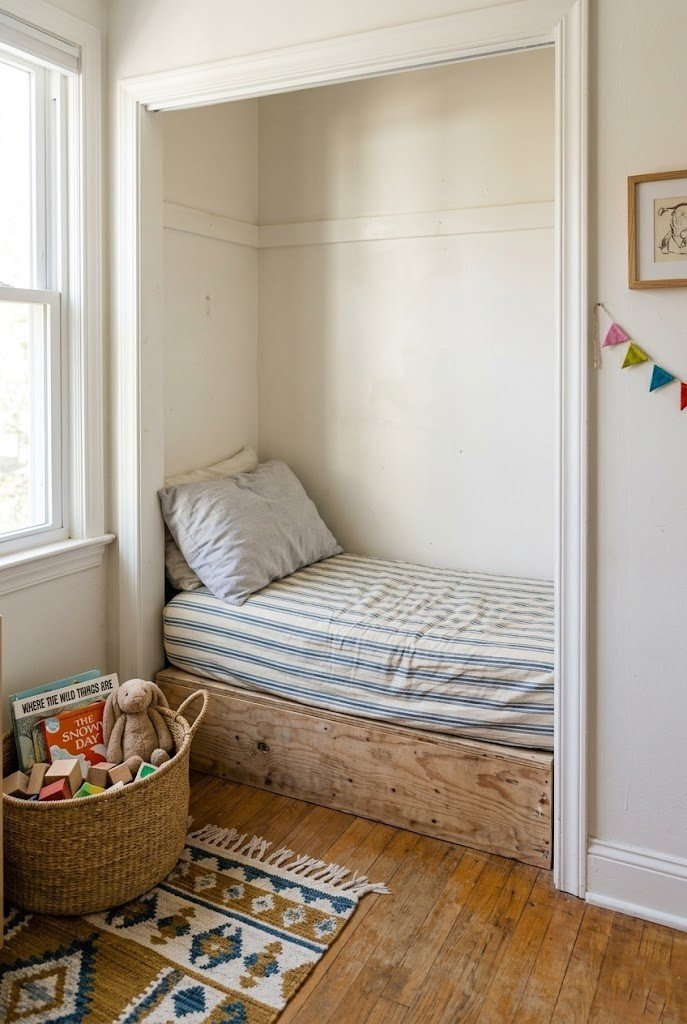
What works: buy a plain foam mattress and cut it to 23 inches deep with a bread knife, then set it on a low plywood platform and cover the whole thing in a striped cotton fitted cover. One pillow at the end and it's a daybed.
Skip this if you're doing it for an adult who wants to actually nap. At 23 inches you're sitting sideways with your legs out the opening, not lying down. It's a kid's setup that adults borrow.
7. Wallpaper the Back Wall Only
 Save
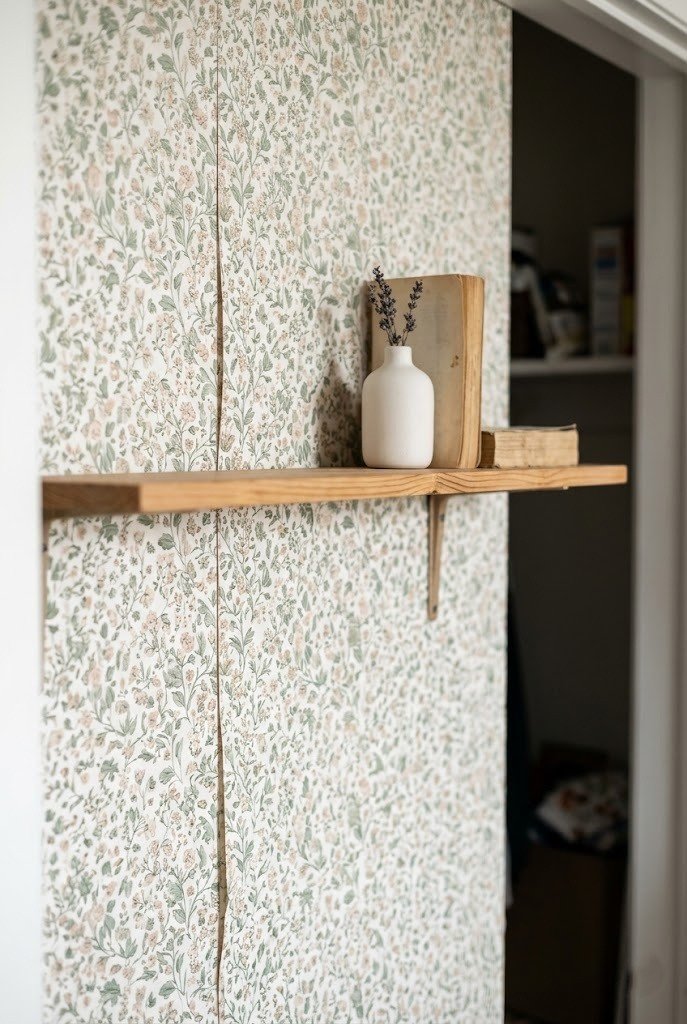
SaveOne wall of small-scale floral peel-and-stick on the back of the nook, and a narrow wooden shelf mounted over it. That's the entire project.
The back wall is the only surface anyone sees from the room, so papering the sides is money you're throwing at a wall your own shoulder is blocking. One roll usually covers it.
Part 2: The Deeper Closet, 28–30 Inches (Ideas 8–11)
Wardrobe alcoves and coat closets often run deeper than the bedroom standard. Those extra four to six inches are the difference between perching and lounging.
8. A 16-Inch Bench With a Real Backrest
 Save
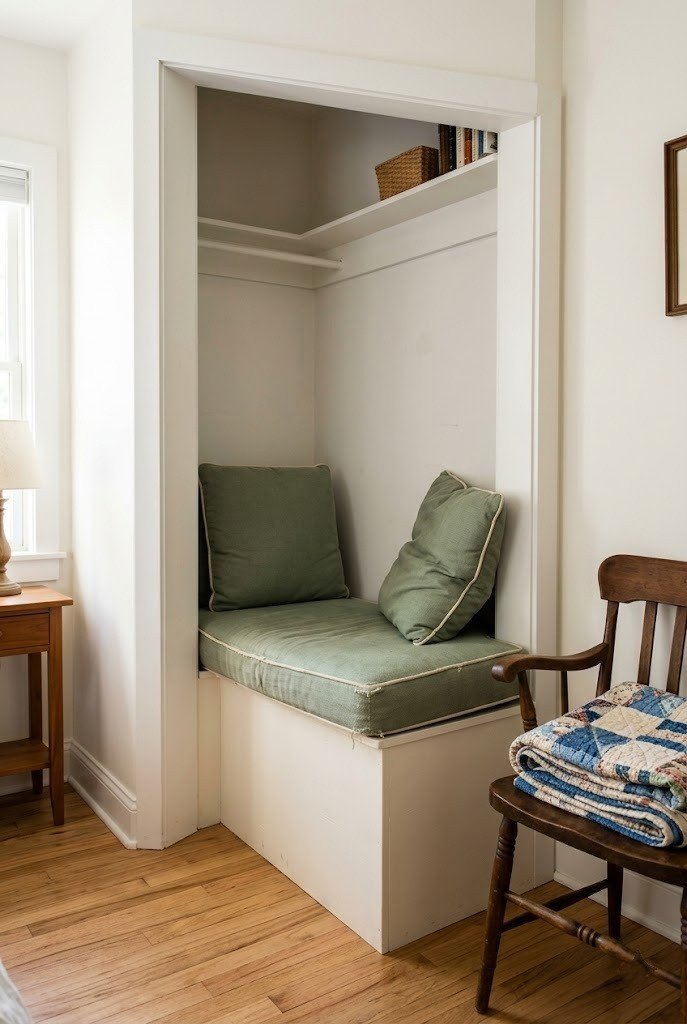
SaveThe math nobody shows you: a comfortable seat is 16 inches deep, and a firm backrest pillow eats another 6. That's 22 inches before you've sat down, which is exactly why this only works past 28.
Painted plywood spanning the alcove, two firm backrest pillows against the back wall, sage green cushion on top. This is the closest a closet gets to feeling like actual furniture.
9. Baskets Under the Bench
 Save
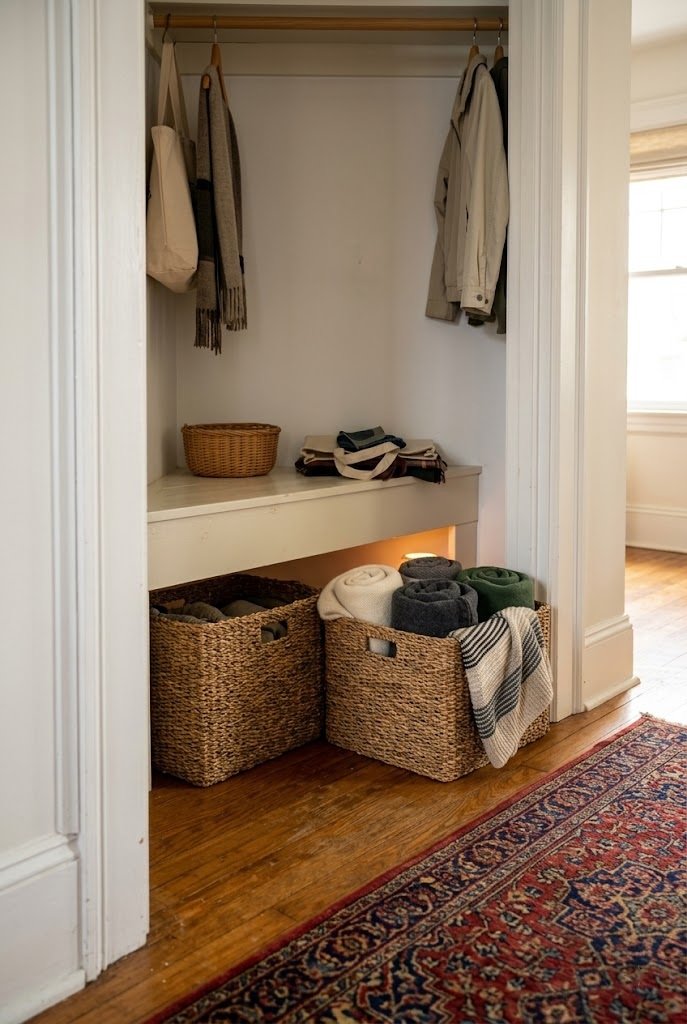
SaveTwo seagrass baskets, one full of rolled blankets, shoved under the seat. Cheapest storage win in the post.
10. The High Book Ledge
 Save
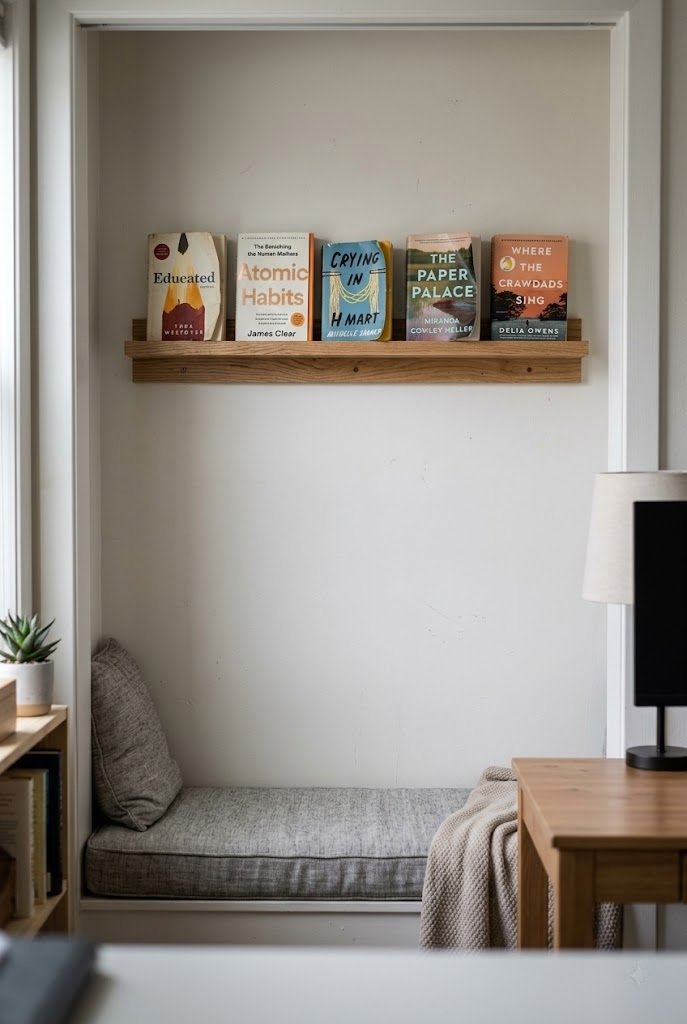
SaveMount it high or you'll crack your skull on it, and I mean higher than feels right, because you sit down into a nook and stand up out of it fast.
A narrow oak picture ledge on the back wall with five paperbacks facing out gives you the bookshop-window look without stealing an inch of the depth you're already short on.
11. A Plug-In Lamp, Wired Honestly
 Save
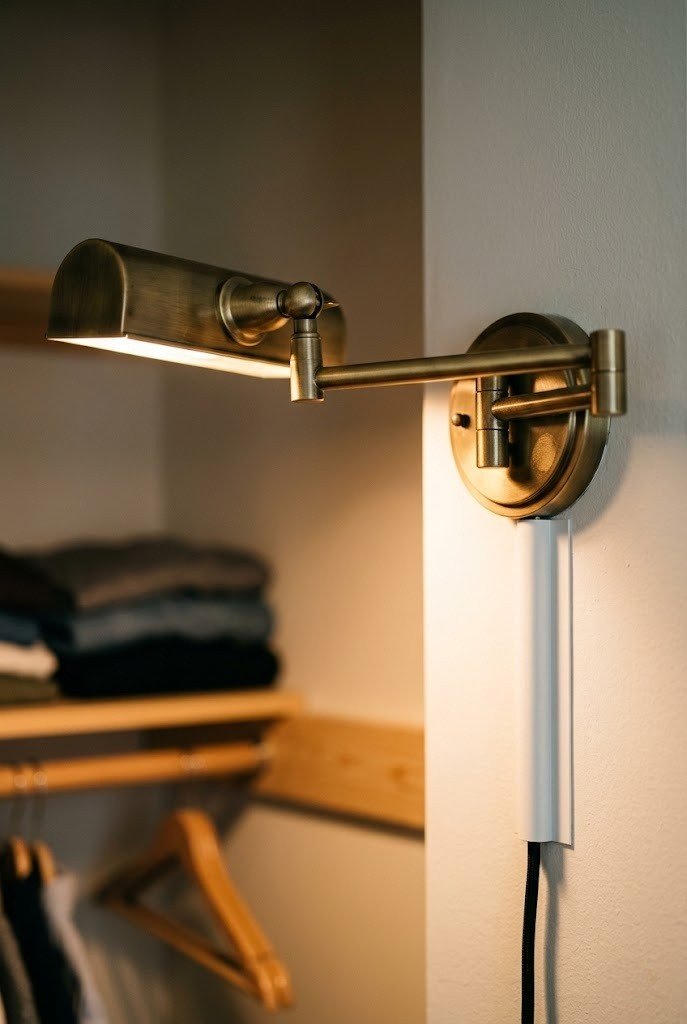
SaveIf you want real light and don't trust batteries, a brass swing-arm wall lamp on the side wall is the answer. The cord runs down through a white paintable cord cover and out along the baseboard.
Some rules that aren't negotiable. Don't run the cord under a rug, because covered cords trap heat and that's a documented fire cause. Don't run it through a door that closes on it either, since repeated closing chews through the insulation.
Route it out of the opening, along the trim, into a wall outlet. Paintable covers are the reason this looks intentional instead of like a dorm room.
Part 3: Doorless Alcoves and Walk-Ins (Ideas 12–15)
Walk-ins start around 4 feet deep. If you have one, you're playing a different game.
12. An Actual Armchair
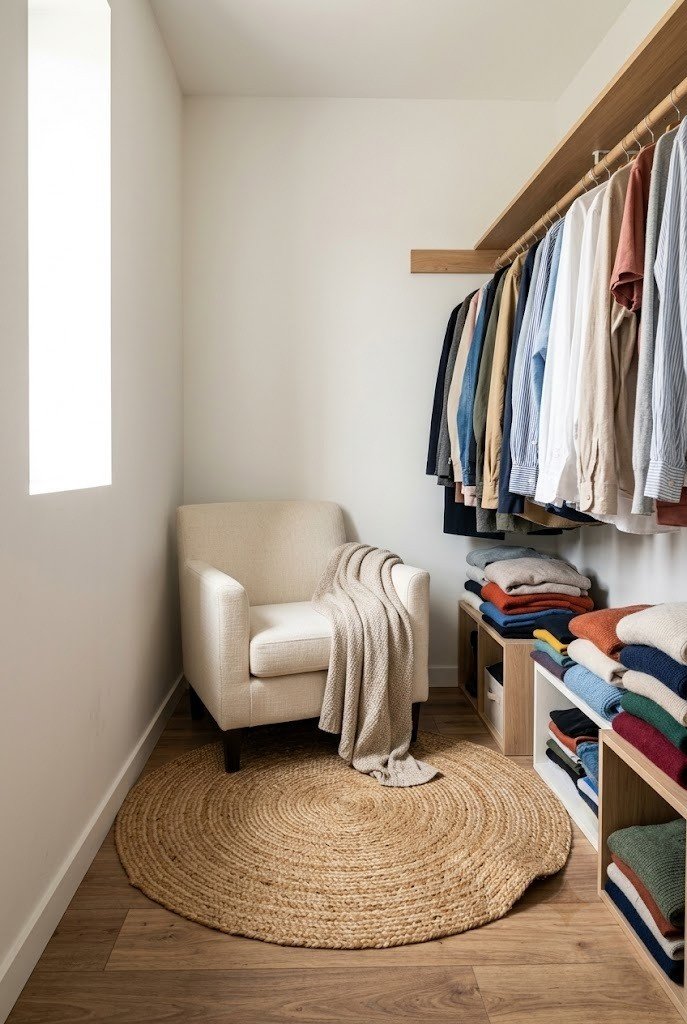 Save
SaveMost of the closet nook photos circulating right now are walk-ins pretending to be reach-ins, and this idea is the reason. A small cream upholstered armchair is still 32 inches deep. Put it against the end wall of a walk-in with a round jute rug underneath and you've got a genuine reading room.
Try it in a 24-inch closet and the chair sticks eight inches into your bedroom with the closet doorframe cutting across the back of it.
13. Nightstand as Side Table
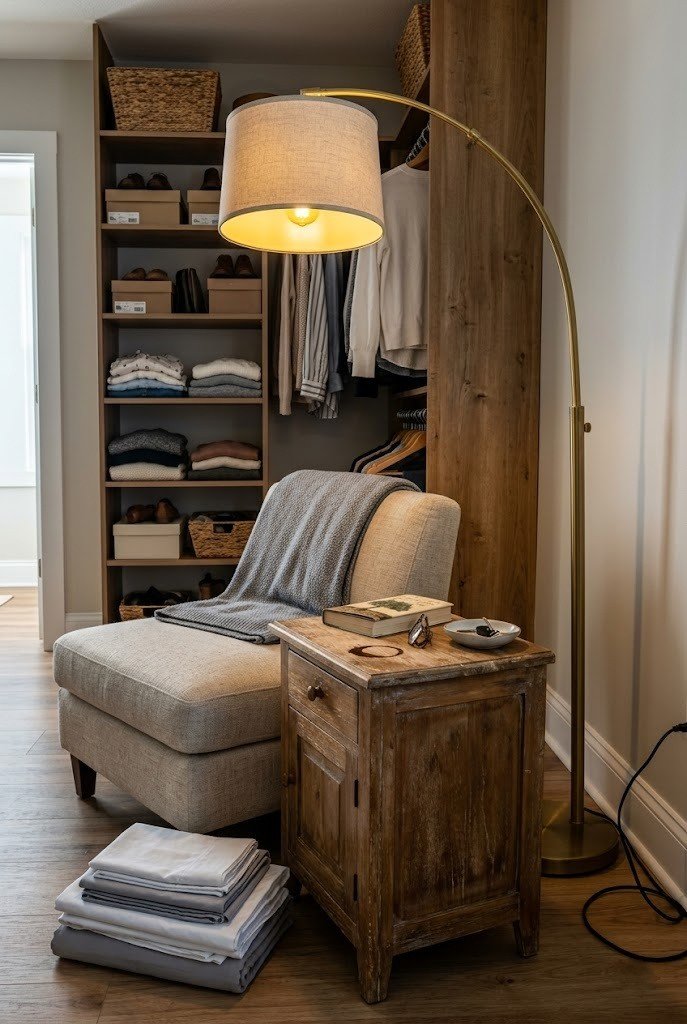 Save
SaveA wooden nightstand you already own, moved next to the seat, with an arc floor lamp curving over it. Two pieces, no purchase.
14. Paint the Whole Inside Dark
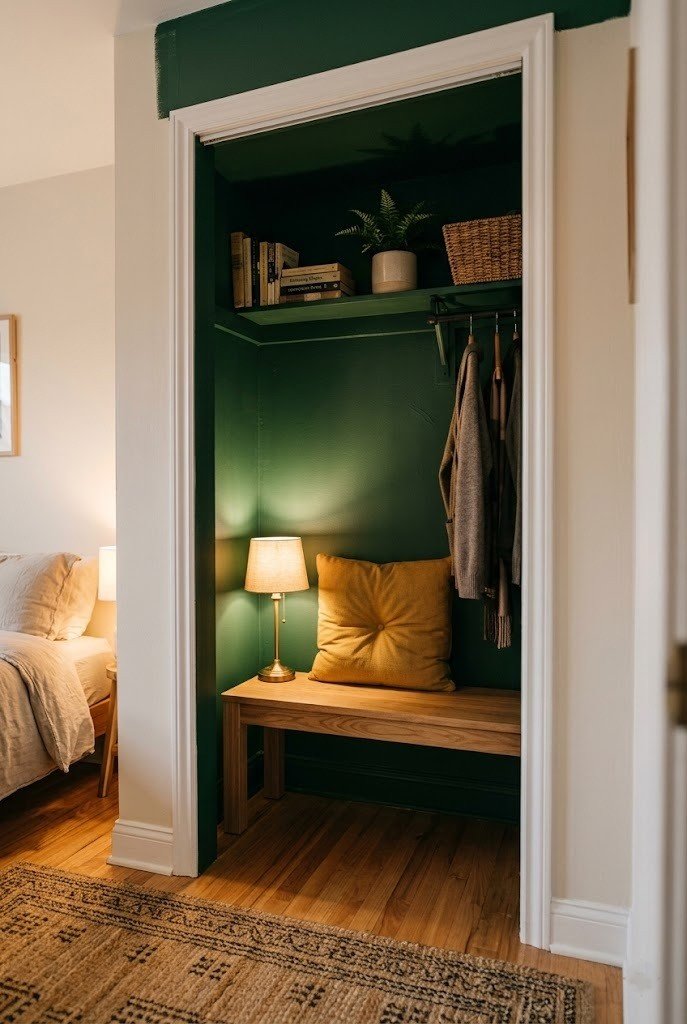 Save
SaveCheck your lease first, because a saturated color takes three coats of primer to cover and some landlords charge for that at move-out.
If you're clear: deep forest green on all four surfaces including the ceiling, with a low wooden bench and a mustard cushion. Painting the ceiling is the part people chicken out on, and it's the part that makes the alcove read as a separate little room instead of a hole in the wall. Once it's done, this is the setup that pairs best with a moodier dark academia styling treatment.
15. The Canopy Rod
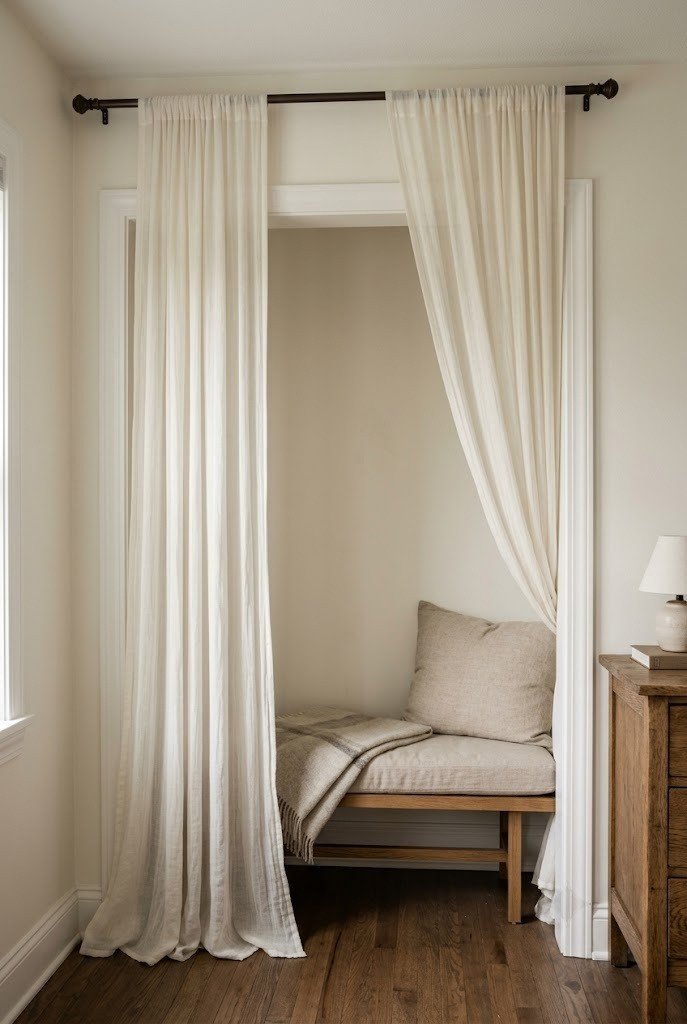 Save
SaveMount a second rod near the ceiling above a doorless alcove and let two panels of gauzy ivory fabric fall to the floor on either side.
It reads like a canopy bed, costs almost nothing, and softens the hard rectangular opening that makes most closet nooks look like a doorway with a cushion in it.
FAQ
Will a reading nook actually fit in a 24-inch closet?
Yes, but only if you sit sideways with your legs out through the opening, or curl up on a 15-inch bench. A standard armchair at 30–36 inches deep physically won't fit, and no amount of styling changes that.
How do you light a closet reading nook with no outlet?
Three options: rechargeable magnetic wall sconces around 300 lumens, small puck lights stuck under the existing top shelf, or a plug-in lamp with its cord routed out of the closet in a paintable cord cover. Never run a cord under a rug or through a door that closes on it.
How much does a closet reading nook cost?
A no-build version with floor cushions, a curtain, and puck lights lands around $80–$150. A bench build with a real cushion, sconces, and wallpaper runs closer to $250–$400.
Can I remove the closet doors in a rental?
Usually yes, as long as you store the doors somewhere safe and reinstall them before you move out. The catch is the track: unscrewing it leaves a row of holes in the header that you'll need to fill and touch up.
Does a crib mattress fit in a reach-in closet?
No. A standard crib mattress is 27 1/4 by 51 5/8 inches, so it's about three inches too deep. Either trim a plain foam mattress down to 23 inches or save the idea for a closet that measures 30 inches or more.
Quick-Pick Table
| Idea | Difficulty | Cost | Best for |
|---|---|---|---|
| Cube shelf bench | Easy | $120–$220 | True 24-inch reach-ins, no drilling |
| Floor cushions | Easy | $60–$160 | Same day setup, any depth |
| Curtain on a tension rod | Easy | $25–$70 | Hiding an unfinished interior |
| Rechargeable sconces | Easy | $20–$90 | Closets with no outlet |
| Puck lights under the shelf | Easy | $12–$35 | Renters who can't mount anything |
| Trimmed foam daybed | Weekend project | $90–$250 | Kids' rooms, closets 24 inches and up |
| Back wall wallpaper | Weekend project | $30–$90 | Making a plain nook photograph well |
| 16-inch bench with backrest | Weekend project | $70–$180 | Closets 28 inches deep or more |
| Under-bench baskets | Easy | $20–$70 | Replacing the storage you gave up |
| High book ledge | Weekend project | $25–$60 | Narrow closets with wall height to spare |
| Swing-arm lamp with cord cover | Easy | $35–$110 | Serious readers who want real light |
| Small armchair | Easy | $180–$600 | Walk-ins only, 4 feet deep and up |
| Nightstand side table | Easy | $80–$260 | Walk-ins, using furniture you own |
| Dark painted interior | Weekend project | $30–$70 | Doorless alcoves, lease permitting |
| Canopy curtain rod | Easy | $35–$95 | Softening a hard rectangular opening |
Tips
Measure at three points, not one. Closets in older buildings come in at 22 or 23 inches instead of a true 24, and framing is rarely square. Measure at the floor, at shoulder height, and at the top shelf. Build to the smallest number you get.
Patch the door track before you move out. This is the part that costs people their deposit. Bifold and bypass tracks screw into the header above the opening, and pulling them leaves a row of holes plus the pivot bracket holes near the floor. Fill them with lightweight spackle using a putty knife, let it dry fully, sand flat, then touch up with paint. Budget an evening and about $15 in materials. Keep the doors and all the hardware in a labeled bag somewhere, because reinstalling them is what turns this from damage into a reversible change.
Decide where the clothes go first. You're deleting hanging space. If that closet was carrying your coats, solve that before you buy a single cushion or the nook becomes a laundry pile within a month. Some of the storage swaps in these renter-friendly small bedroom ideas will cover the gap.
Cord safety isn't optional. Don't run cords under rugs, don't run them through closing doors, and don't daisy-chain a power strip into an extension cord. A rechargeable sconce is the boring answer and it's the right one.
Light it from the side, not overhead. Closets have a hard ceiling shadow. A sconce at shoulder height on the side wall fixes it instantly, and it's also what makes the nook photograph well.
Final Thoughts
The honest version of this project: 24 inches is enough for a bench, a lamp, and a cushion you'll fight your cat for. It isn't enough for the armchair, and every list that pretends otherwise is selling you a return trip to the furniture store.
Start with the cube shelf bench and one rechargeable sconce. That's under $150 and it's already a nook. Everything else is decoration on top of a thing that already works.
Measure your closet tonight and tell me what number you got. And you'll find one lone sock behind the baseboard when you clear it out. Everyone does.